


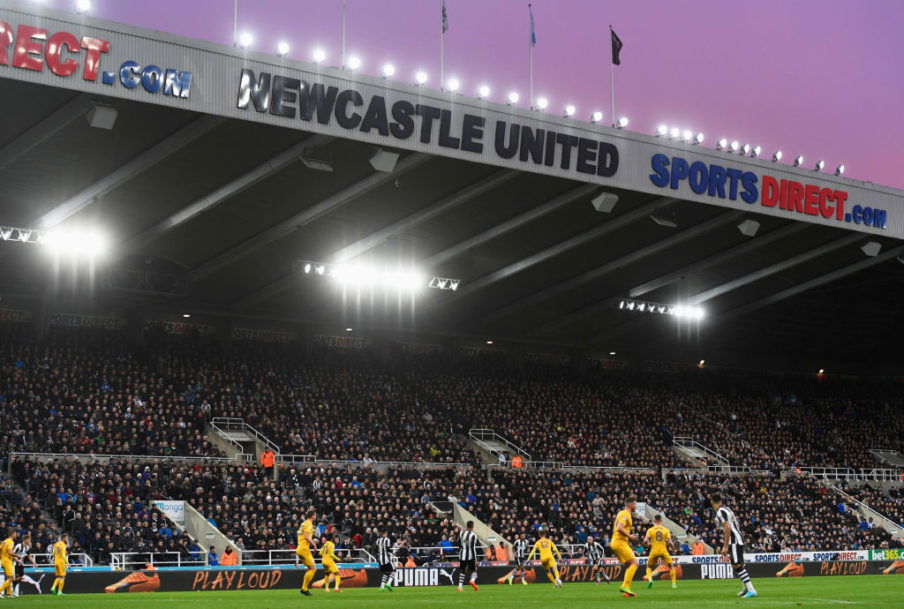
For many of us, St James’ Park Stadium is inseparably known as a home of Newcastle United Football Club. Forever associated with football, it certainly brought us beautiful sporting memories. The object, as an important piece of local landscape, means so much more to the community than that, and often hosts unforgettable events.
Being one of the oldest association football grounds in the country, the place is certainly a significant part of the history of the discipline. The name by which it became known originated from some old streets and buildings in the close vicinity. Mainly, the chapel and hospital of St. James located where Hancock Museum now stands in the city. Since the 1899 and the first major development resulting in setting the number of seats at 30,000, the stadium has taken up many reconstructions projects. The desire to expand, more often than not, had to face some strong opposition, which created a few conflicts with local authorities and residents.
A mere six years later the capacity was doubled, and the venue even had a swimming pool. First few decades of the new century were the time of grand designs. Some of them were made possible due to the works of renowned architect Archibald Leitch. In the vast majority, the improvements plans stayed on paper. Another couple of decades had passed until significant implementations were introduced, like the installation of floodlight pylons in 1953 and the later upgrades of 1958. Many years of political turbulence and financial struggles has finally led to the big 1993-95 expansion, making the stadium ready for upcoming 1996 Euro tournament.
The main purpose for the object has always been football. The first team to ever conduct a game on the St. James’ Park was Newcastle Rangers. It was an organised practice match that happened in 1880 – the whole 12 years before Newcastle FC was officially founded. Newcastle West End and their rivals Newcastle East End took turns as tenants in later years, until the two finally merged in 1892, giving the rise to our beloved Magpies. The stadium itself became a home for a fair share of exciting games, and went through many memorable moments: periods of success, as well as sporting decline, including relegations and this season comeback to Premier League.
From time to time, the object hosts other sporting events. For international football purposes, it was included in Euro 1996 and 2012 Olympics games, as well as a few England’s matches, as one of the Wembley replacements. There were also rugby matches at St James’ Park, including 2015 Rugby World Cup, and there will be more to follow, as the place was chosen as host for the 2019 finals of the Champions Cup and European Rugby Challenge Cup. The next opportunity to watch rugby at Barrack Road comes on Saturday, March 24th, when Newcastle Falcons will be there for their big clash against Northampton Saints.
For the big sporting objects, the offseason could be a busy time, too. Sometimes, supervisors and administrators have to be a little creative. St James’ Park is no stranger to special events, like Grand Prix Poker Tour in 2016. With numerous online providers and mobile poker sites where you can play on the go, it is a nice change to participate in truly big live tournament. Choosing a football stadium for the venue seems like a fun idea, and not uncommon one. Besides that, our object has seen its fair share of various special events, charities and music concerts, has been used as film set and for telly’s purposes. The next big thing in the calendar for the moment are Ed Sheeran’s shows scheduled for early June.


